Reimagining Iranian Architecture through Artificial Intelligence
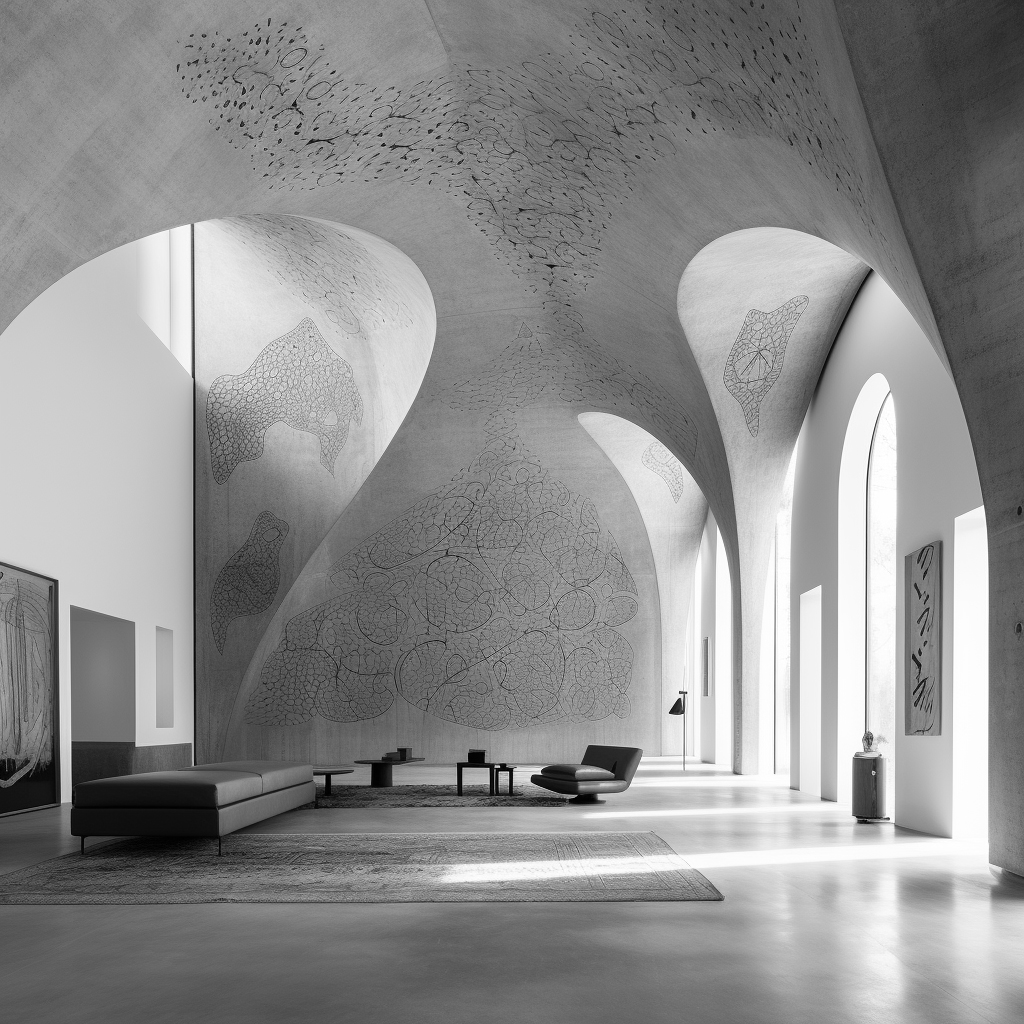
Synthesized Structures: Visualizing the Architecture of Neural Networks through AI
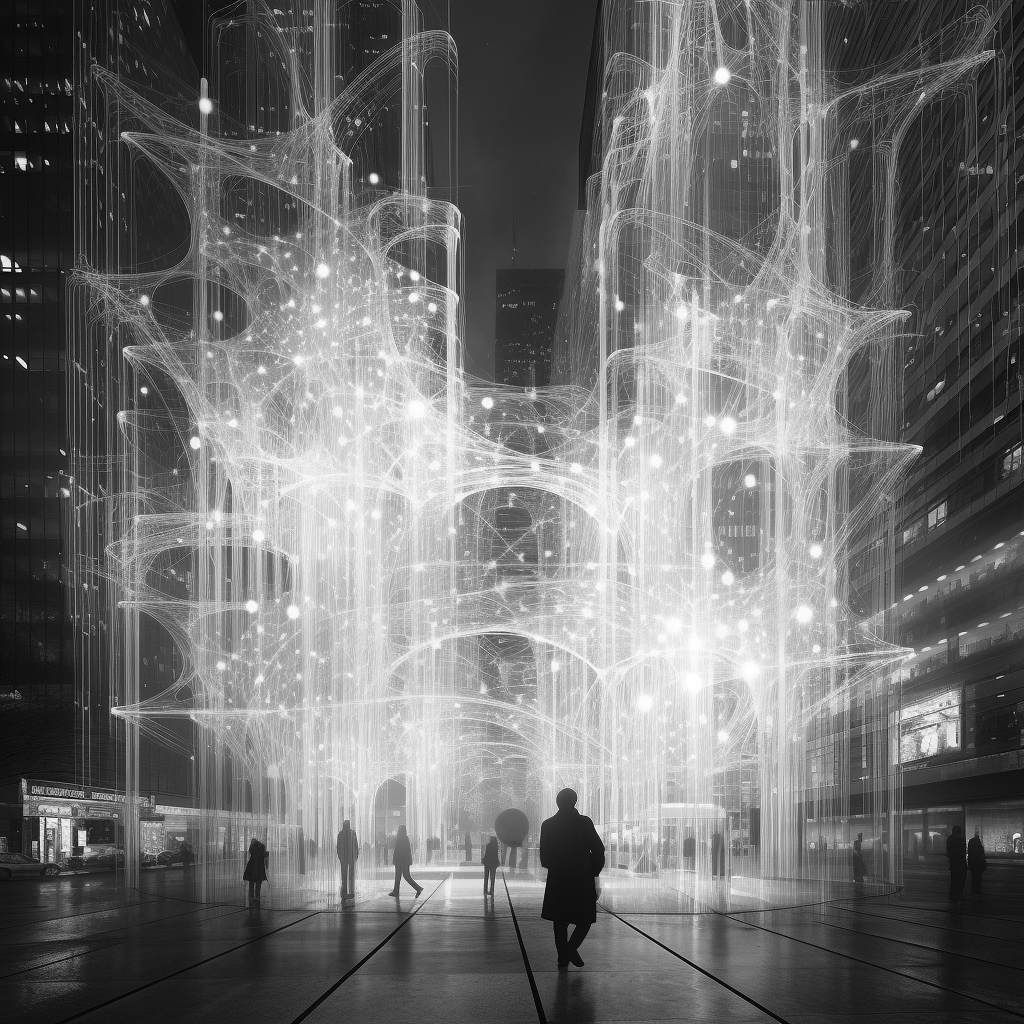
In this series, I have tried to visualize neural networks in an architectural way utilizing the AI application, MidJourney. A neural network, inspired by the human brain, serves as the ‘brain’ for artificial intelligence, aiding it in learning from abundant data and making decisions. It sifts through loads of information, finds patterns, and decides actions, providing a digital yet strangely organic form of cognition. This visualization attempts to weave those digital ‘thought’ processes into a format we can see, explore, and ponder.
Gravity-Defying Residences: The Evolution of Flying Architecture
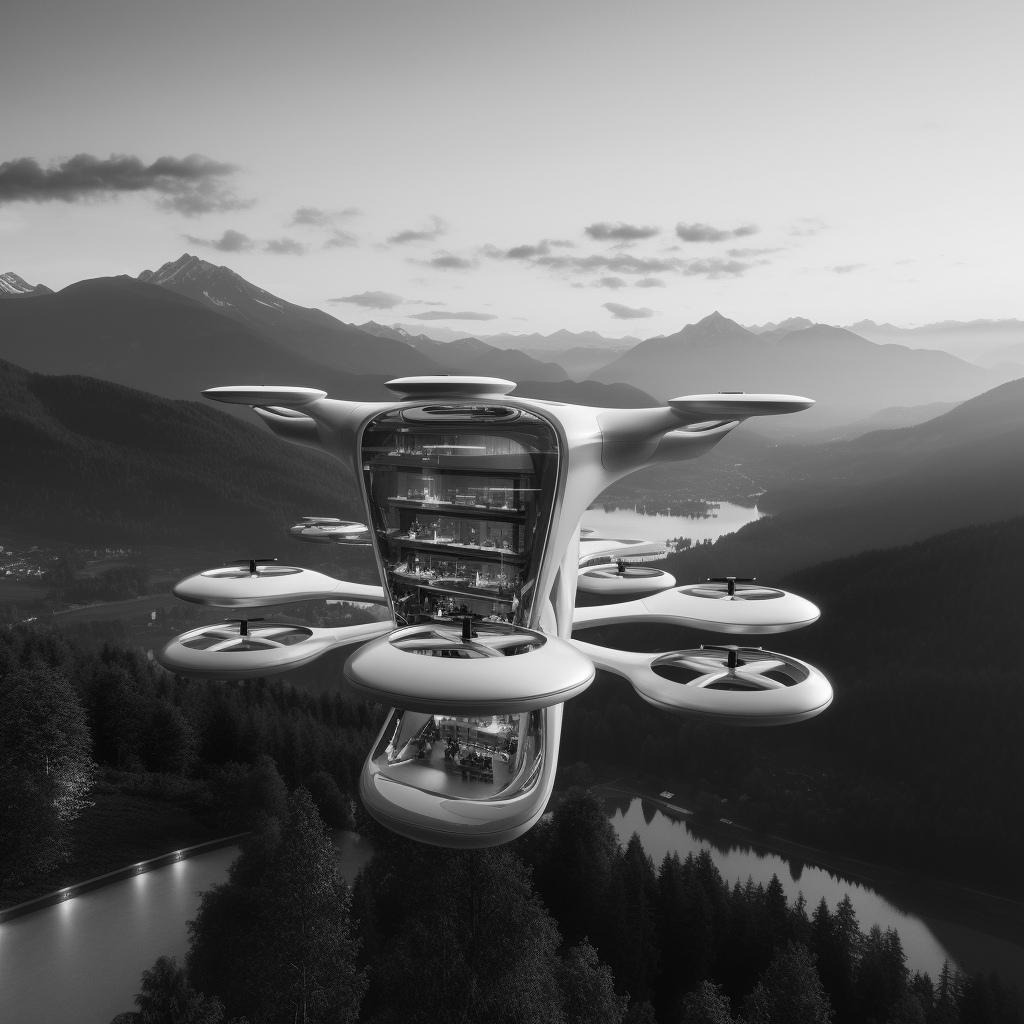
In a world where technological advancements redefine boundaries daily, envisioning a future where we conquer not only airways for transport but also redefine our living spaces becomes imperative. Creating the concept of the AeroVillas, I seek to merge the enchantment of flight with the comfort of home, crafting homes that both float and fly.
Drawing inspiration from the rapid advancements in flying boards, specifically the Flyboard Air, there’s potential to expand this technology beyond transient moments of aerial travel to establish permanent airborne residences. Imagine awakening to the New York skyline one day and the snowy peaks of the Alps the next. Such dynamic living experiences are the promise of the AeroVillas.
The aesthetic inspiration comes from futuristic designs that echo avant-garde aircraft, high-tech drones, and hoverboards. The visual execution of the AeroVillas has been meticulously crafted using the “Text to Images” program, Mid Journey, reflecting a synthesis of luxury and pioneering technology. Each villa boasts an exterior that’s sleek and aerodynamic, while interiors celebrate modern design with sumptuous comforts, promising a life less ordinary.
As we stand on the brink of significant technological metamorphosis, the AeroVillas symbolize more than a mere concept. They embody a future where gravity isn’t a constraint but an element we’ve mastered. My work invites us all to look upwards and dream, for in the coming years, the sky might not merely be the limit but our next destination.
The RedRestBox: Revitalizing UK’s Red Telephone Boxes

Welcome to RedRestBox, a pioneering initiative where I’ve transformed the UK’s iconic red telephone boxes into private micro-living spaces. Born from a concern for societal sleep deprivation, these urban sanctuaries are accessible to city dwellers and travelers via a membership scheme and an easy-to-use app.
Incorporating cutting-edge principles, AI, and the revolutionary Midjourney text-to-image software, my design crafts captivating, functional spaces out of these historical boxes. The exterior blends simplicity with futurism, while the interior draws inspiration from modern, high-tech automobile interiors, deftly merging comfort with advanced features.
The RedRestBox concept is rooted in sustainability, using recycled materials and solar panels. Each box is equipped with a meticulously designed sleep bed, providing a haven for rest and rejuvenation. My design not only addresses sleep deprivation but also sparks conversations on sustainable urban design and the potential of adaptive reuse. Welcome to the future of urban living – welcome to RedRestBox.
Molotow 2050

Welcome to a journey of design and music, a fusion of human creativity and artificial intelligence. This is a tribute to the beating heart of St. Pauli — the iconic Molotow Club. As an ardent patron and admirer of this musical institution, I’ve used the innovative text-to-image AI program, Midjourney, to visualize a futuristic vision for Molotow Club 2050.
Stepping into Molotow Club is akin to immersing in a world of pulsating indie beats, where songs like ‘Please, Please, Please’ by Shout Out Louds echo through the walls. The rallying cry of ‘Molotow muss bleiben’ reverberates within us, a testament to our shared love for this musical haven.
With the power of AI, my designs reflect the club’s edgy spirit and its signature black and red theme, paying homage to the iconic interior filled with vinyl records. Each image is an AI-generated vision, offering a glimpse into countless unforgettable nights and the club’s potential future.
Join me on this journey through AI-created imagery, where I combine present experiences and future aspirations into a visual love letter for Molotow Club. Explore how technology can help us envision the future of our beloved spaces and how it can forge a bridge between our shared past, present, and the years ahead — all the way to 2050. This design tribute transcends traditional art forms, linking our collective memories to the boundless possibilities of the future.
Spatial Installations Inspired by Human Genome

RedTechPod

Discover RedTechPod, a cutting-edge reinterpretation of London’s iconic red telephone boxes. As the brainchild of my architectural and design endeavors, these sleek, red workstations have been meticulously tailored to suit the varied needs of the contemporary urbanite.
RedTechPod offers more than just a simple workspace. It’s a tranquil refuge where individuals can quickly access a computer, conduct a silent video conference, or even provide a cozy setting for small group discussions. Equipped with cloud-based computers, touchscreen displays, and acoustically isolated interiors, these workstations stand as tranquil oases amidst the bustling London cityscape.
Each RedTechPod embodies my commitment to sustainability. Built from recycled metal and powered by photovoltaic panels, these revamped telephone boxes strike a balance between cutting-edge technology and environmental consciousness, aligning with the global stride towards greener urban solutions.
Step inside a RedTechPod, and you’ll find interiors echoing the sophistication of high-tech car designs. This ergonomic, lounge-like setting ensures comfort and productivity, creating a conducive environment that encourages creativity and focus.
In the creation of RedTechPod, I’ve merged the nostalgia of London’s classic red telephone boxes with the potential of AI in urban design. This innovative transformation applauds London’s rich heritage while trailblazing a path towards a more connected and sustainable future. Immerse yourself in the RedTechPod experience – where heritage meets innovation.
The New Soccer Stadium of London
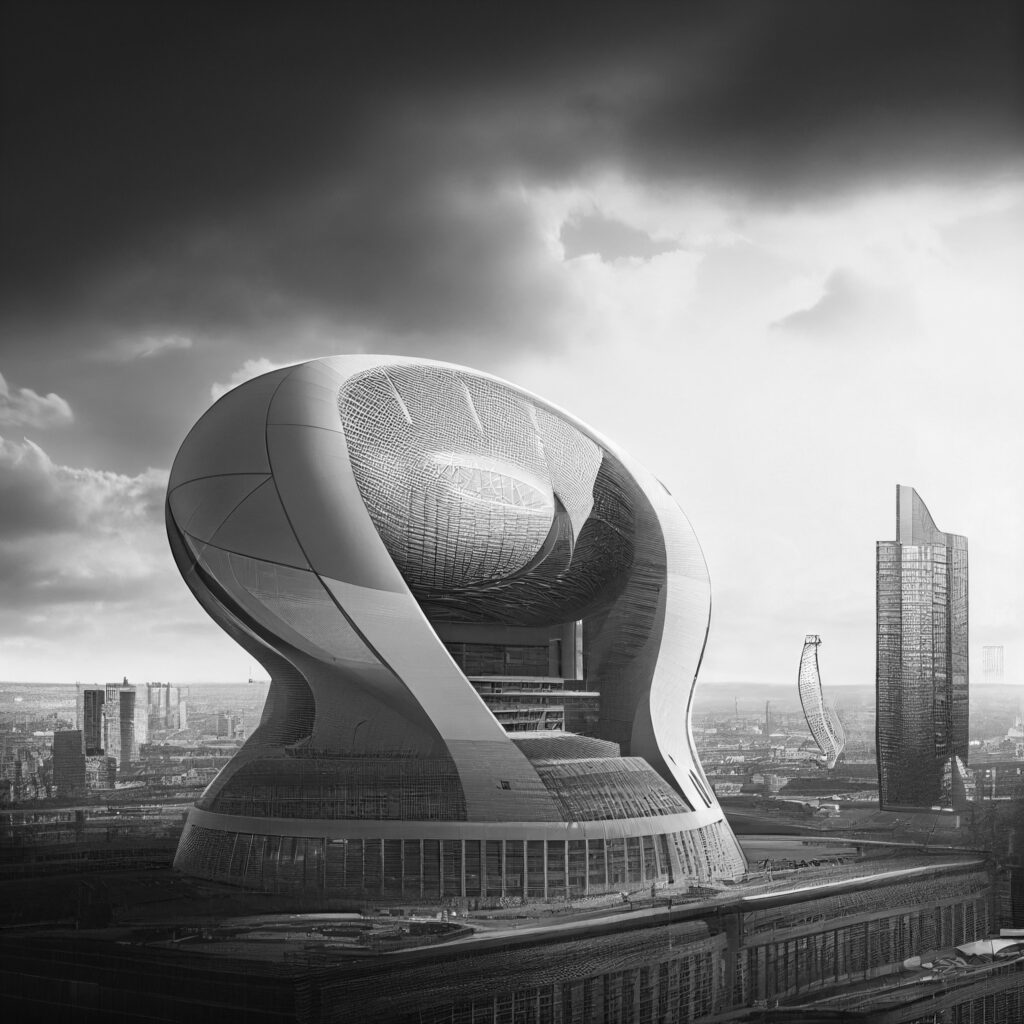
This innovative project involves the conceptualization of a series of futuristic soccer stadiums in London, realized through the use of the text-to-image program Midjourney. Drawing from British high-tech architecture, these imagined sports arenas showcase the potential of image generator software in reviving visionary architecture and significantly impacting the field.
The digital art series uncovers a wide range of design scenarios and options, placing unique structures in unexpected urban contexts. Artificial intelligence image-generating tools such as Midjourney open new avenues for innovative and creative solutions in conceptual design.
The series features captivating images of soccer stadiums imagined within London’s urban landscape. These designs present futuristic curved volumes of large-scale constructions, serving as conceptual visions for sports arenas.
Artificial intelligence design tools streamline the design process, enabling a focus on conceptualization and refinement of ideas rather than on manual tasks. This shift in process may revive visionary architecture, encouraging designers to fully tap into their creative potential and challenge the boundaries of what is possible in the built environment. Discover this digital art series and its transformative potential on the future of architectural design.
The Braid

Hair, throughout human history, has been more than just a biological feature. It is a form of self-expression, a means of communication, and an integral part of our identity. As we trace back to ancient Egyptian civilizations, where wigs were used to symbolize wealth and status, and move forward to our modern times where hairstyles reflect political and social movements, hair remains a crucial aspect of our culture.
With the steady advancement of AI, we are entering a new era of cultural evolution that includes changes in hair trends and styles. Hamburg-based architect and designer, Pouria Babakhani, has accepted the intriguing challenge of visualizing the future of hair in the age of artificial intelligence. Using a text-to-image program, Midjourney, he has devised futuristic hair designs inspired by parametric design, futurism, surrealism, and mathematical art.
Pouria’s work encompasses a wide array of hair designs for different ethnic, age, and gender groups. This approach underscores the importance of diversity and inclusivity when employing AI. Hair design, as a case study to examine the capabilities of AI design software, brings to light the potential benefits and challenges of using AI in defining fashion trends.
AI brings to the table the possibility of generating unique hair trends that cater to individual needs and preferences. It offers a wider range of options for personal expression through hair, impacting our sense of identity. Moreover, AI can benefit society by introducing a diverse spectrum of innovative hair trends that reflect our varied humanity. Imagine AI-assisted robots crafting geometrically complex braids that humans might find challenging to create.
However, it is equally important to consider the potential pitfalls of using AI in hair design. There lies a risk of AI-generated trends discriminating against certain groups or ethnicities. We believe in the necessity of employing AI responsibly to ensure that the hair trends it generates are inclusive and do not perpetuate harmful stereotypes or biases. As designer Vivienne Westwood rightly said, “Fashion should be a form of escapism and not a form of imprisonment”. AI undoubtedly holds the potential to revolutionize the world of hair and fashion, but it is our collective responsibility to ensure its use is ethical and inclusive.
AI Chair
